
Project study
A clearer home for resident resources.
An anonymous account of documented work. The emphasis is on the structure, decisions, and tangible deliverables.
The design problem
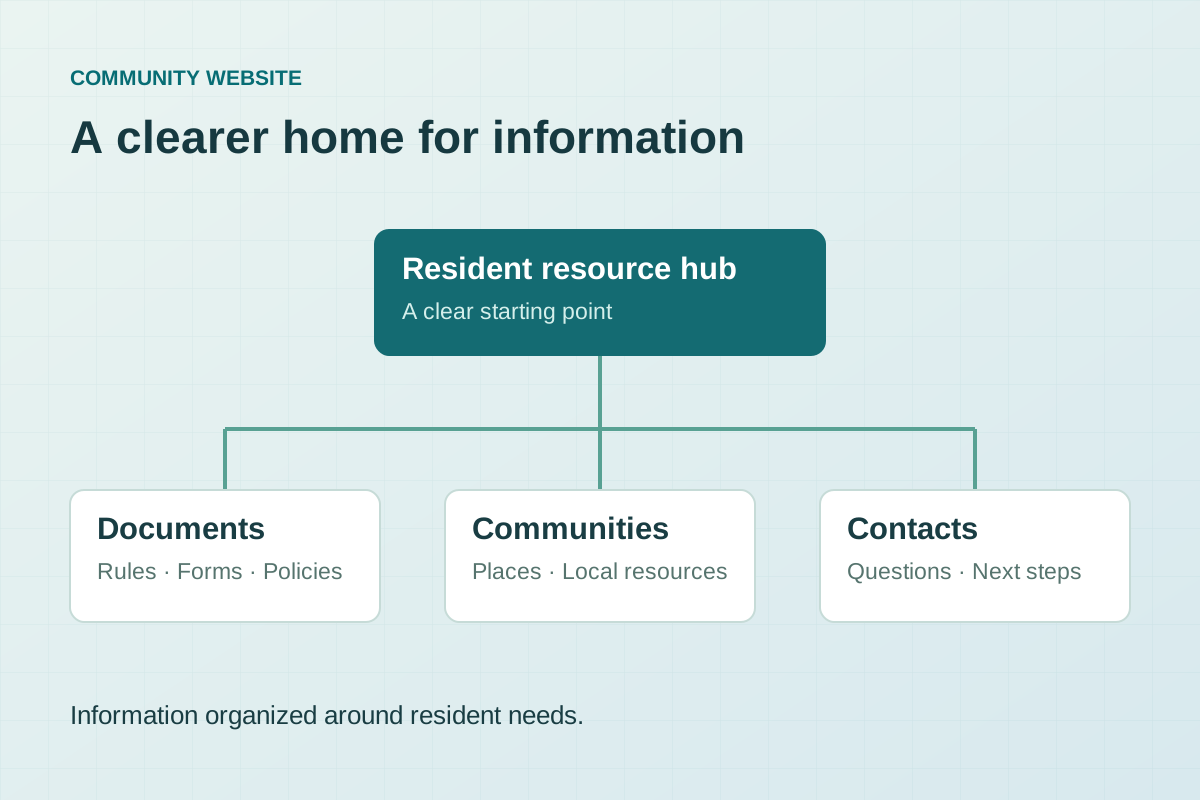
A resident website needs to support many different questions: where to find a document, which contact handles a concern, and how to learn about a community. The project organizes those tasks into visible routes instead of asking every visitor to interpret the organization’s structure.
What the build contains
The reviewed files include a document hub grouped by purpose, community detail pages, a contact directory organized around common needs, and dedicated resource pages. A site search interface supports website and document results, with an explanation that some scanned documents are searchable by title only.
The design decisions
Navigation uses familiar resident tasks. Document sections separate governing materials, policies, reserve planning, and pending items. Contact guidance distinguishes types of requests and directs users to the responsible organization. The experience gives context before a visitor leaves for an external service.
What can be established
The deliverable is a substantial local website preview with responsive styles, content pages, resource organization, and search code. Project notes describe a later platform implementation as pending. This study does not assert a production launch, verified live integrations, reduced support volume, or measured resident satisfaction.
The transferable lesson
When a website exists to help people get something done, information architecture is part of the service. Clear labels, useful explanations, and honest boundaries can be as important as the visual design.
What would you like
to make possible?
A new website. A clearer brand. A better way to work.